peps: increasing cooking motivation through gamification and monetization
project: app | timeline: 4 months | designers: gil espinoza, areen deshmukh
peps is an app to help incentivize users to look at cooking less as a chore and more as a game. how exactly? by decreasing cooking time and being awarded credit that can be used for grocery stores and/or take out food (ex. uber eats). our recipes provide a 30-45 min cooking experience that puts a little “pep” in your day to day life. but how exactly did this app come to life? with one single assumption.
we assumed wrong
when starting this project, our assumption is simple—the cooking market needs an app where users can store their recipes, so we should make one. why exactly? because from our personal experience, recipes are being used from social media apps such as tiktok and instagram. however we decided to survey multiple people and interviewed 9 individuals aged 22-35 who are working, in school, or juggling both and set out to understand how people find, save, and organize recipes in their daily lives.
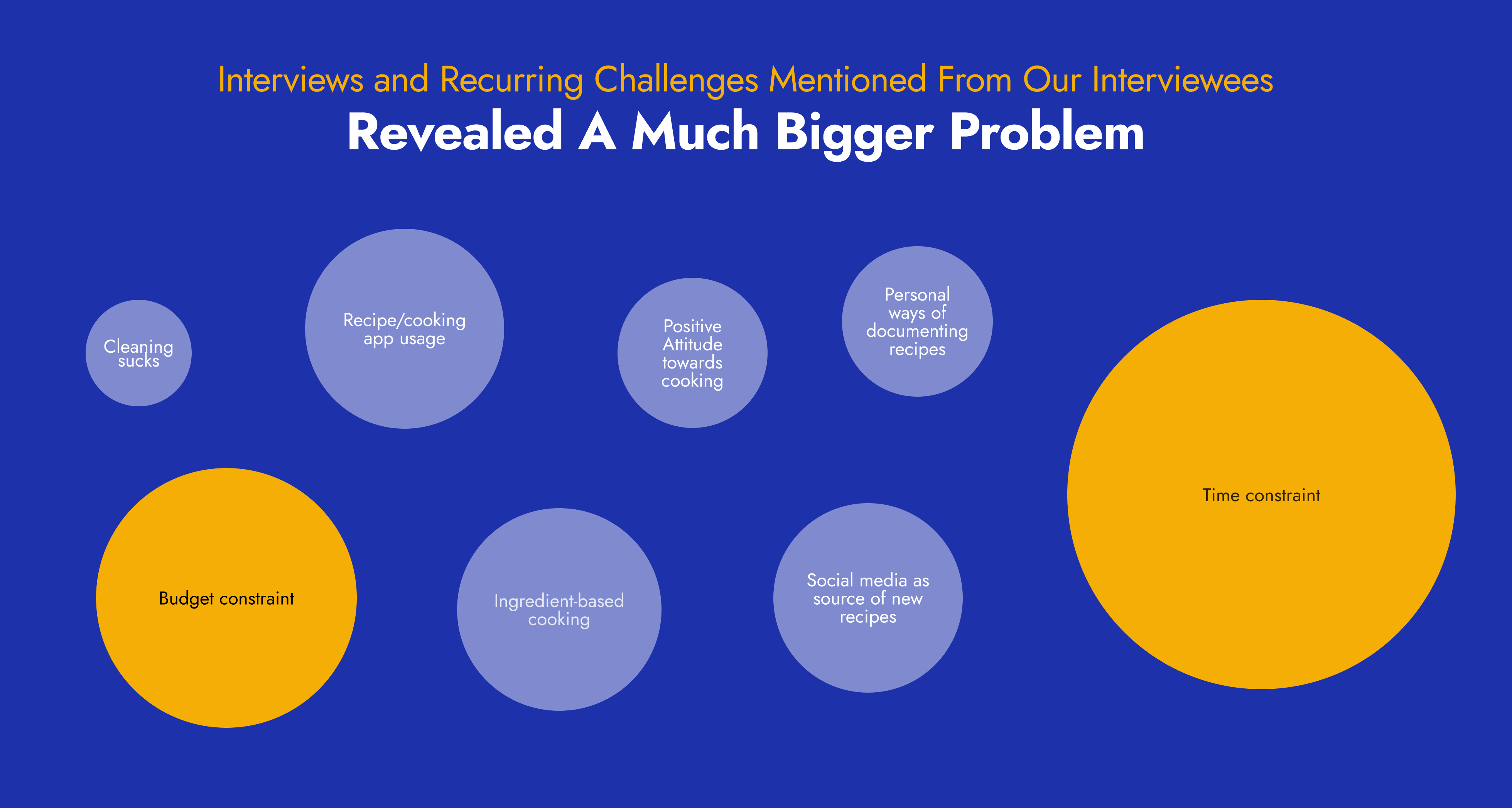
instead of a recipe management problem, participants described a motivation problem, a time problem, and a cost problem.
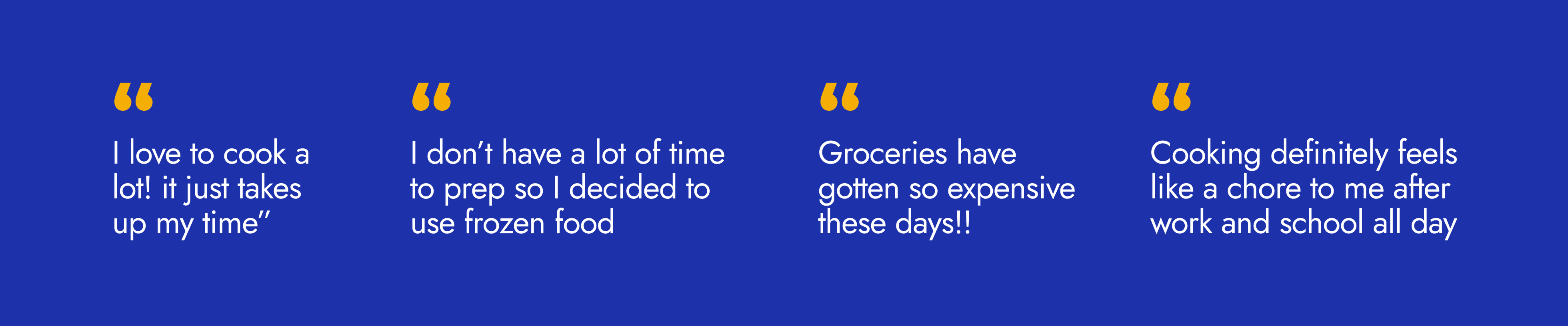
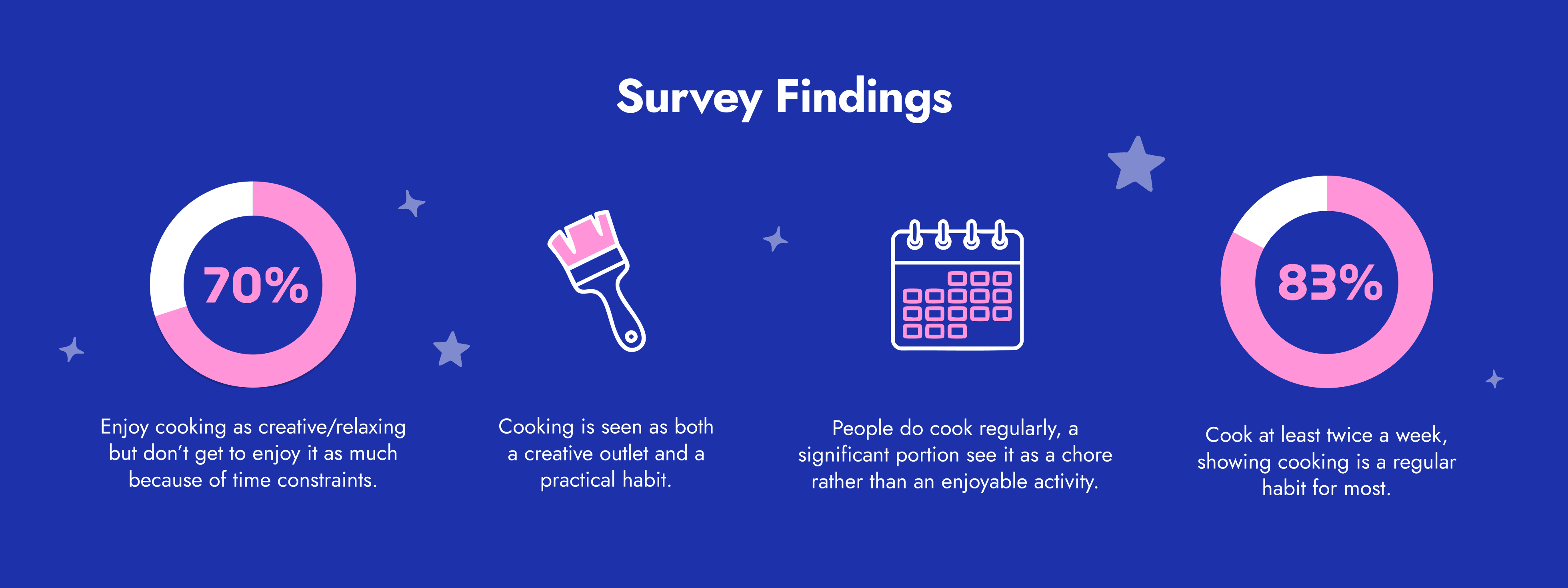
in addition, our survey results reinforce what we heard in interviews — people do like cooking, but time constraints and the mental load make it feel like a chore. cooking holds a dual role in people’s lives — it’s both a creative outlet and a practical necessity. in addition, cost holds weight in a person's cooking decision. the gap lies in how to make everyday cooking feel less like a chore and more like the enjoyable part.
food for thought
insight 1: people want to cook, but time constraints make it hard to commit to cooking regularly.
what we observed: busy schedules leave little time for planning and prep. long or complex recipes feel intimidating on weekdays. users prioritize speed over experimentation. why this matters: when cooking feels time-consuming, users default to the fastest option — often takeout or skipping meals altogether.
insight 2: high grocery prices make users risk-averse when choosing what to cook. what we observed: users avoid recipes with unfamiliar or one-off ingredients. experimentation feels financially risky. cost influences recipe choice as much as taste. why this matters: cooking decisions are driven by budget constraints, limiting variety and enjoyment.
insight 3: even users who enjoy cooking experience it as a task, not a pleasure, during busy weeks. what we observed: mental exhaustion reduces motivation to cook. decision fatigue makes starting the hardest step. cooking loses its role as a creative or relaxing activity. why this matters: when cooking feels like work, consistency drops — not because users don’t care, but because they’re overwhelmed.
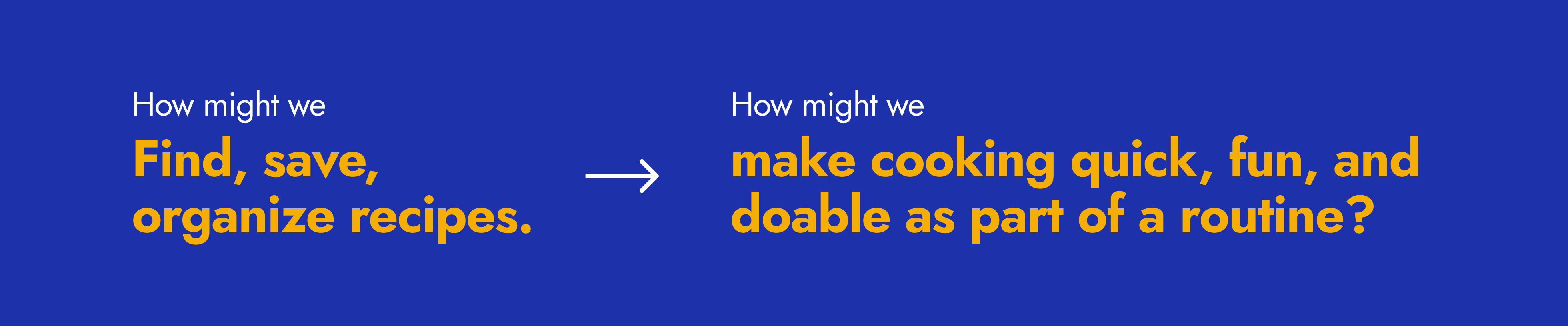
with these insights in mind, our problem statement evolved.
what other apps are cooking?
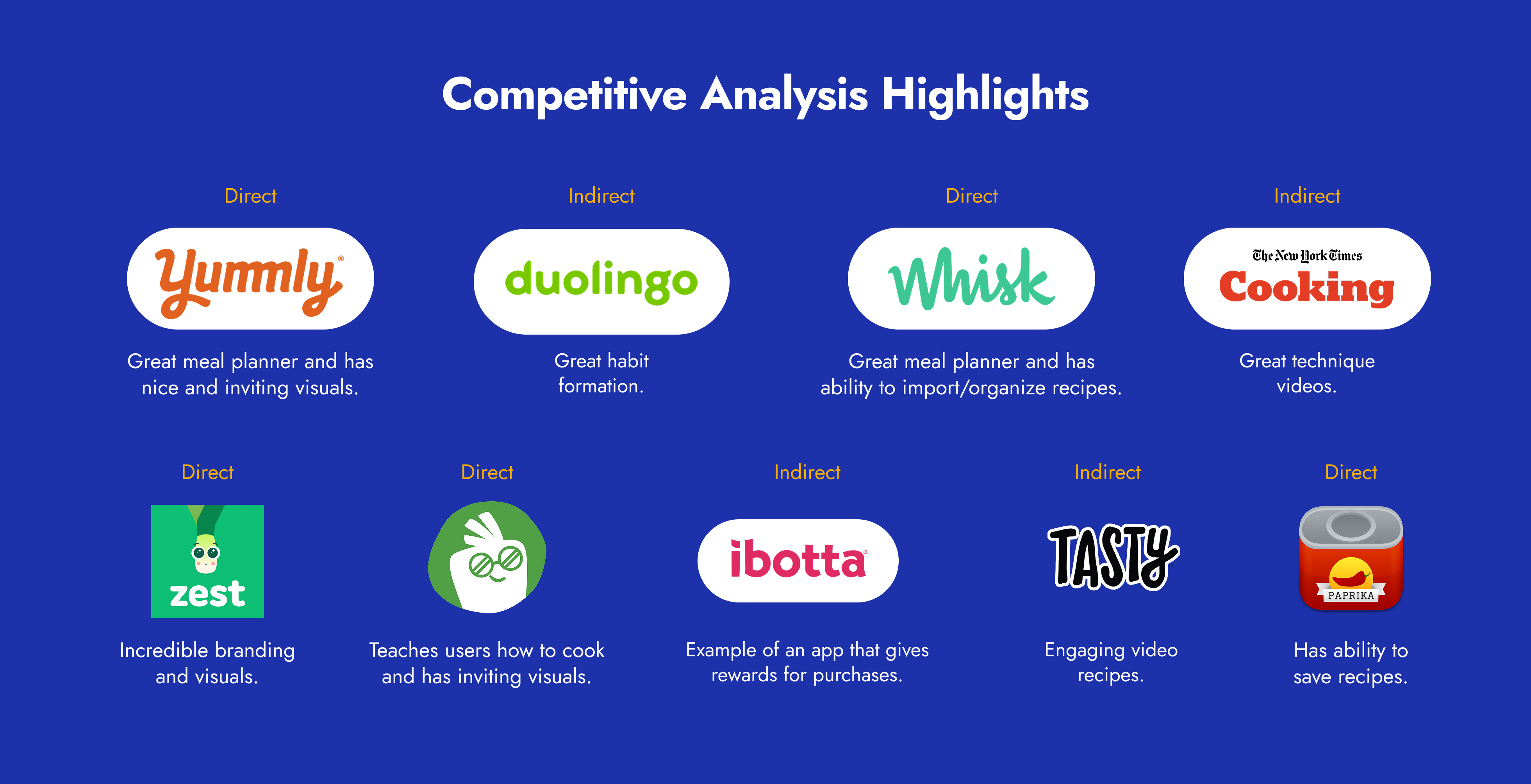
we reviewed leading cooking and meal-prep apps to understand how they support home cooks. while they offer great recipe discovery and organization tools, none directly address cooking as a chore, time limitations, or grocery cost anxiety.
spotting a recipe for change
while each app has its strengths, none of our interviewees reported using them—except for one who had tried zest. among all competitors, zest stood out as the most playful in both its ui and its educational, game-like format. almost like a combination of a recipe app and duolingo. this insight pointed us toward a clear direction: designing at the intersection of motivation, time, cost, and enjoyment.
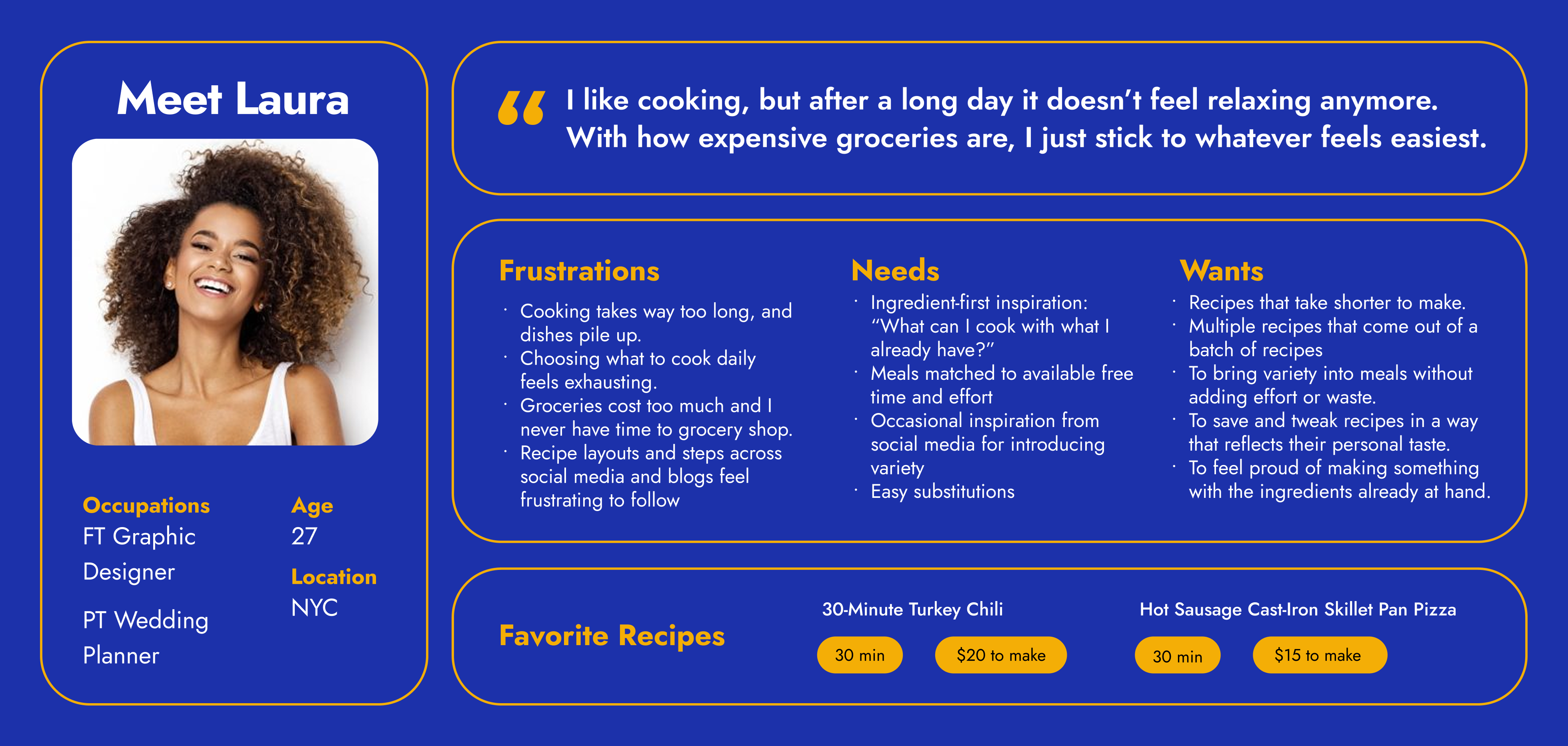
this is laura, our primary user. laura is in her late 20s, juggling multiple jobs with an active social life. weekdays are a blur of work, commuting, and trying to squeeze in errands or a quick workout. by the time she gets home, cooking feels like a chore rather than a pleasure. they enjoy cooking when they can — it feels grounding, healthier, and more affordable than eating out — but the reality of long workdays, groceries, and cleanup often makes it hard to keep consistent. they’re always looking for ways to simplify daily routines and carve out more balance between their personal well-being and professional responsibilities. laura helped us focus on a key insight: people don’t dislike cooking — life has made it feel like work.
cooking up ideas
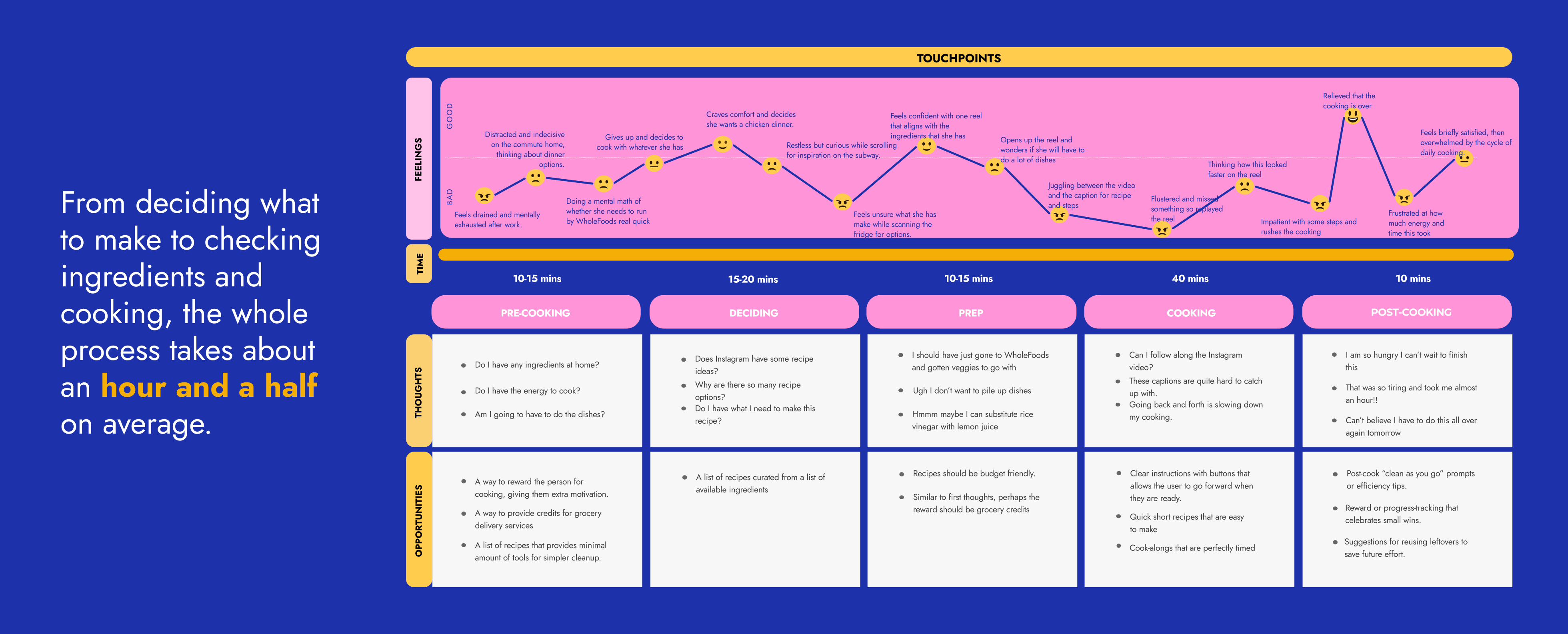
after finding our insights and learning how long the cooking process takes, we started brainstorming ideas using moscow.
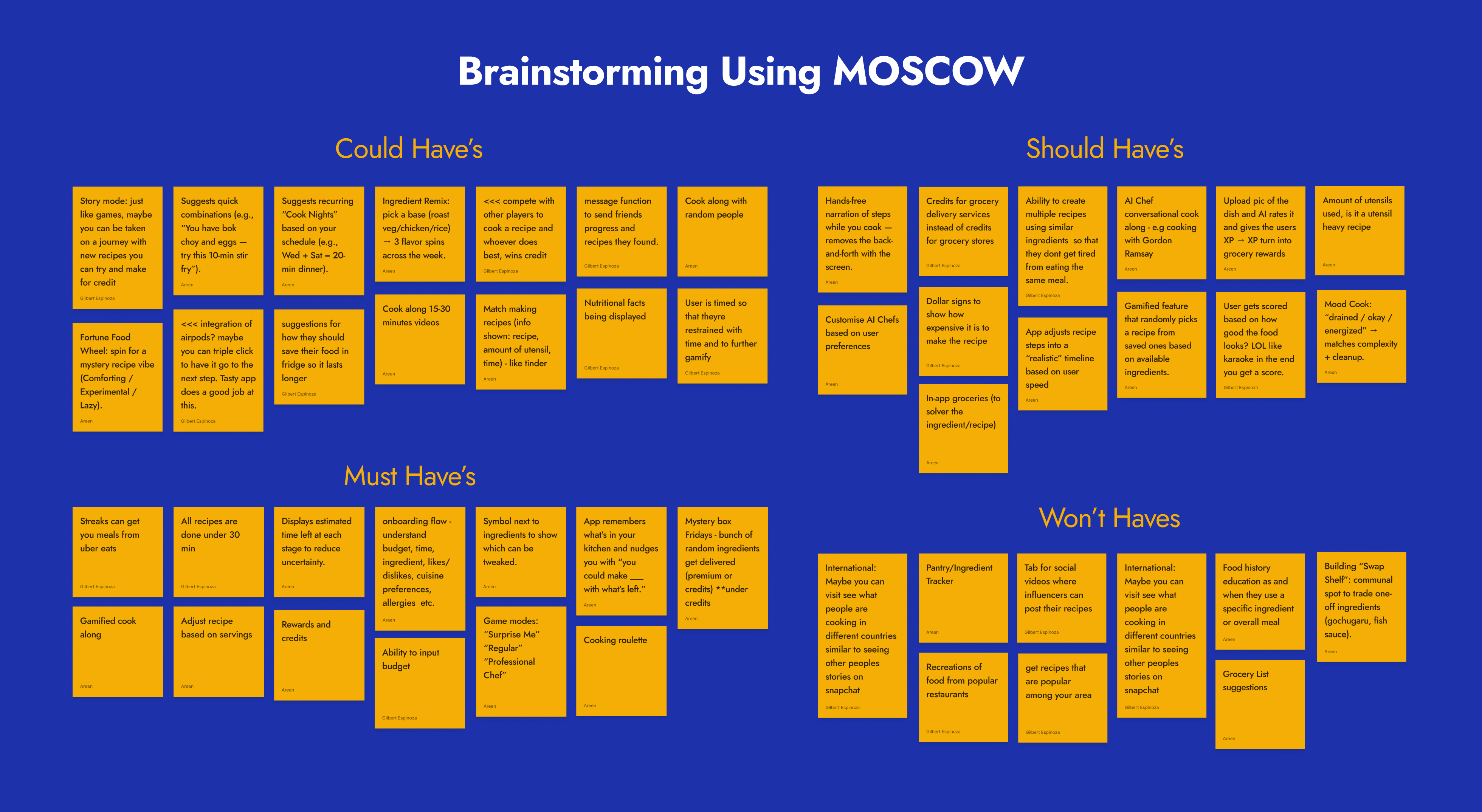
by using moscow, we’re able to categorize all of the ideas by priority. we knew that certain features had to get implemented like streaks, for example, so that our users are motivated to come back. perhaps there’s game modes so that there’s a recipe for everyone ranging from new chef to a more seasoned chef. perhaps we can include a feature called “mystery box” fridays so that you get random ingredients delivered for you to cook with. despite the all the ideas we had, we eventually had to go back to what our user needed.

we went back to our equation and thought of a solution for every part of the equation. the ai chef introduces a guided, cook-along experience that makes cooking feel more engaging and less overwhelming. gamifying the experience adds motivation and encourages users to keep going, even on low-energy days.
to address time constraints, the app prioritizes recipes that can be made in ≤45 minutes or less, helping users quickly choose something that fits into their schedule. and finally, the rewards system gives users points they can redeem for groceries or takeout, helping offset rising food costs and making the effort feel worth it.
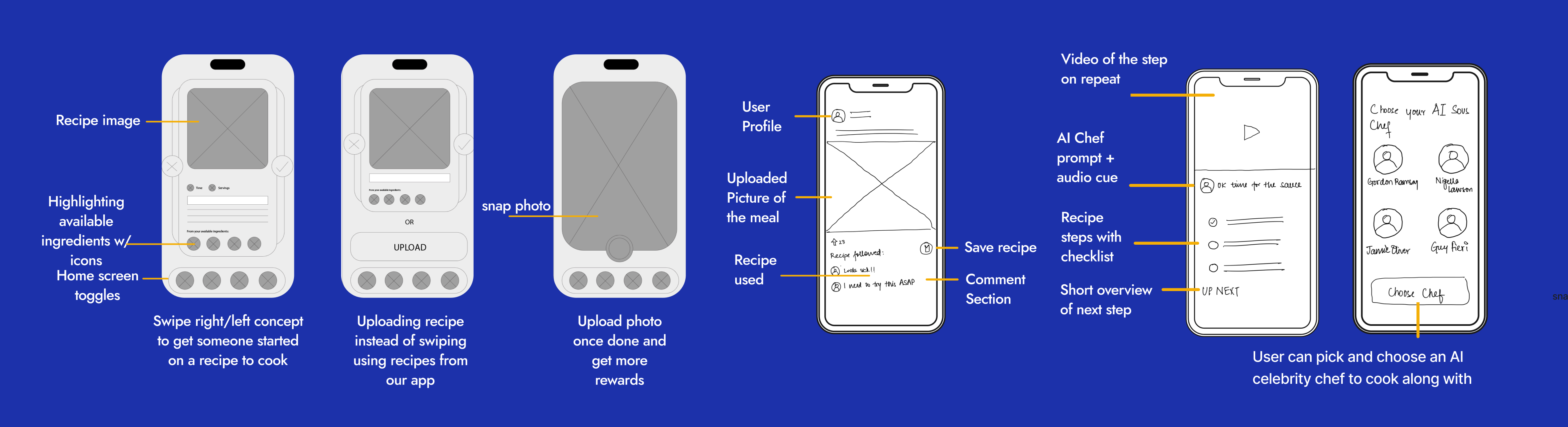
we started to visualize how this could look by sketching some ideas. what if we have a tinder like function where you can swipe on recipes so you can get matched to a recipe that’s fit for you? how does the app determine if you cooked the meal? perhaps by uploading a photo? what could social media look like on this app? how could we include videos and ai chefs into this experience so that the recipe is easy to follow? how are we going to include monetization into this experience? eventually, this kept evolving.
creating and seasoning the look
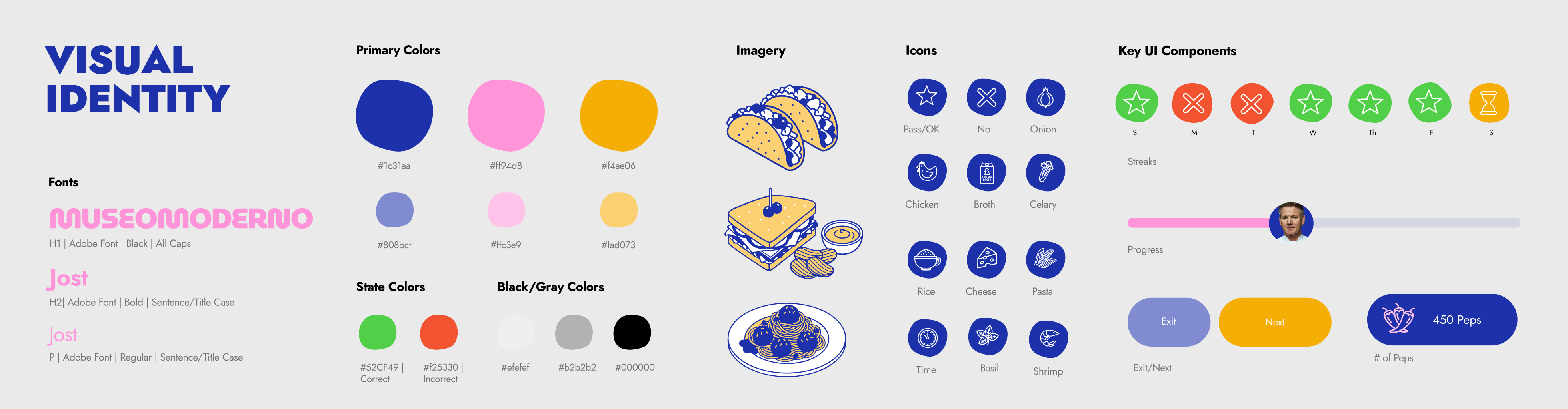
as our sketches were evolving, it became clear that our app would and should be a fun one—and we needed color, typography and illustrations to support that. we wanted to emote motivation, excitement, playfulness and inspiration. we did that by going with a typeface that is fun. we chose this blue, pink and yellow palette because of its bold nature. the unpolished look of our imagery and illustrations invite our users to be messy with their cooking experience and to ultimately have fun.
bringing the ingredients together: how peps works
once we were able to finalize our visual identity, it was time to bring all the ingredients together.
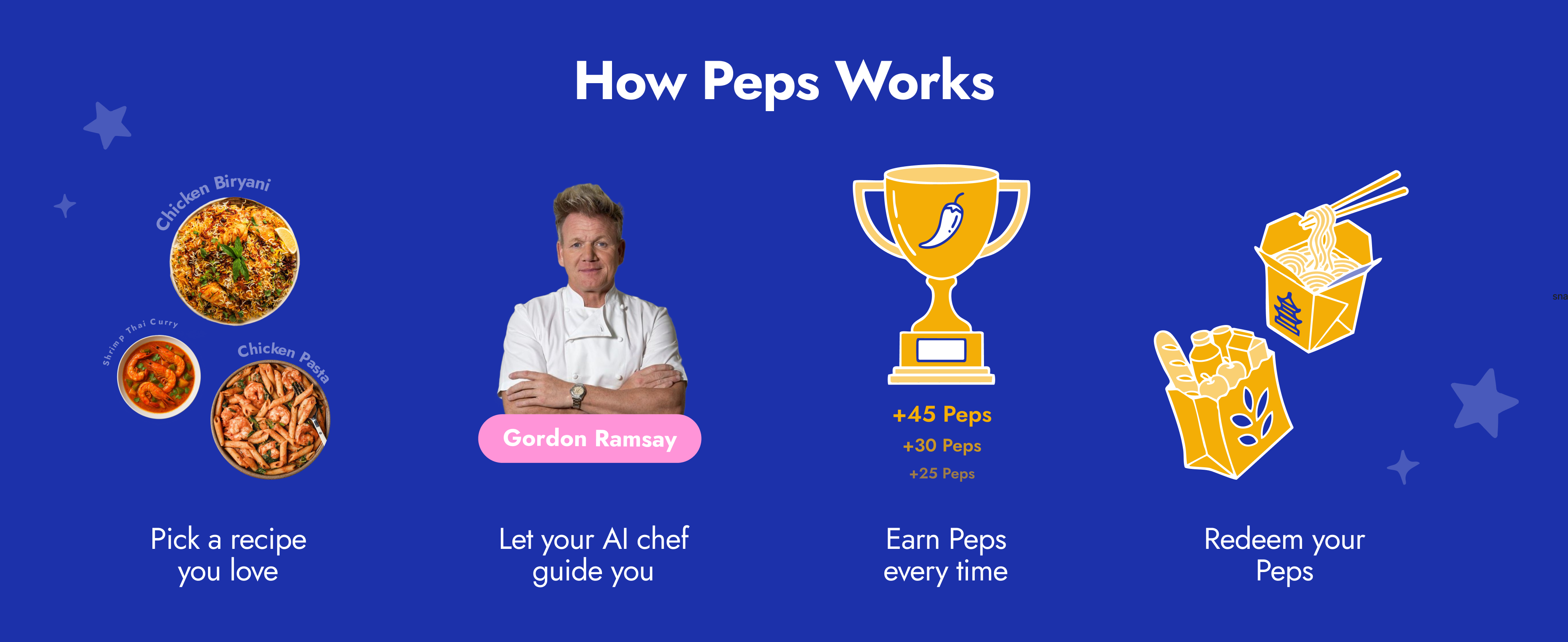
every recipe provided in this app is ≤45 minutes therefore through the entire cooking experience, you know it’ll be short. there’s also a range of ai chefs that will guide you through the cooking process. once you’re done cooking you get rewarded with “peps”. the more peps you earn, the more you can redeem for gift cards to grocery stores and/or take out (ex. uber eats, grubhub, etc).
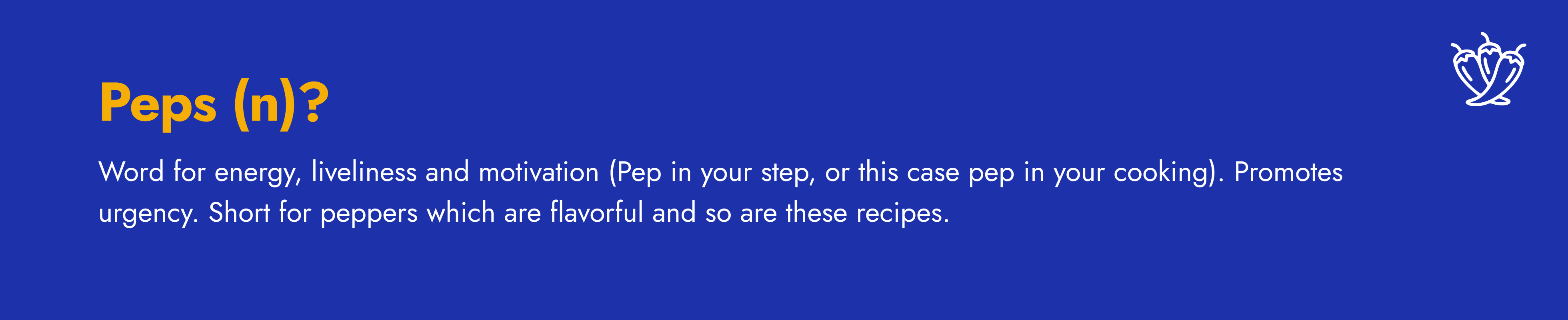
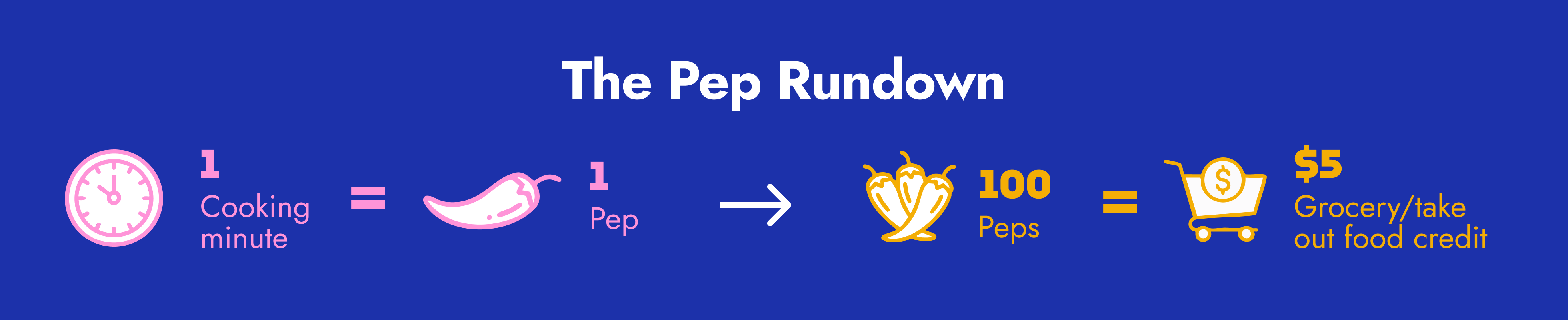
what exactly is a “pep”? pep is a word that represents energy, liveliness, and motivation — like having pep in your step. that’s exactly the feeling we wanted to bring into cooking. it also subtly promotes a sense of urgency and momentum, encouraging users to keep moving and stay engaged. and finally, it’s a playful nod to peppers — something flavorful and central to cooking, just like the recipes in the app. naturally we chose peps as a currency for this app. every cooking minute is equal to 1 pep. and you can exchange 100 peps fo $5 grocery/takeout credit.
meet peps
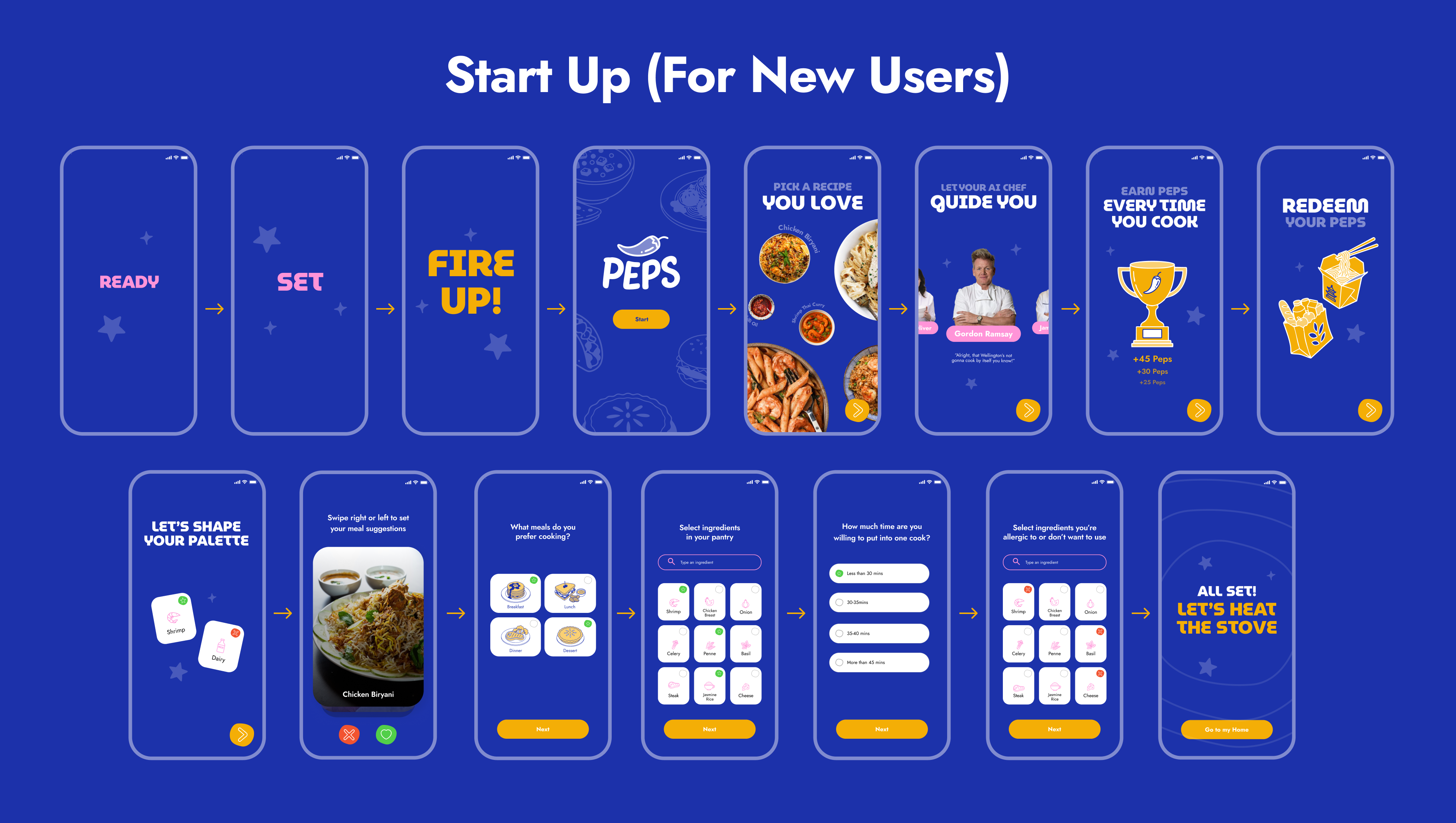
the timer rang and it’s finally time to see what we cooked up. first time users are greeted with a quick rundown of the app and a questionnaire that includes questions like ingredients they use a lot so that the app becomes familiar with the user.
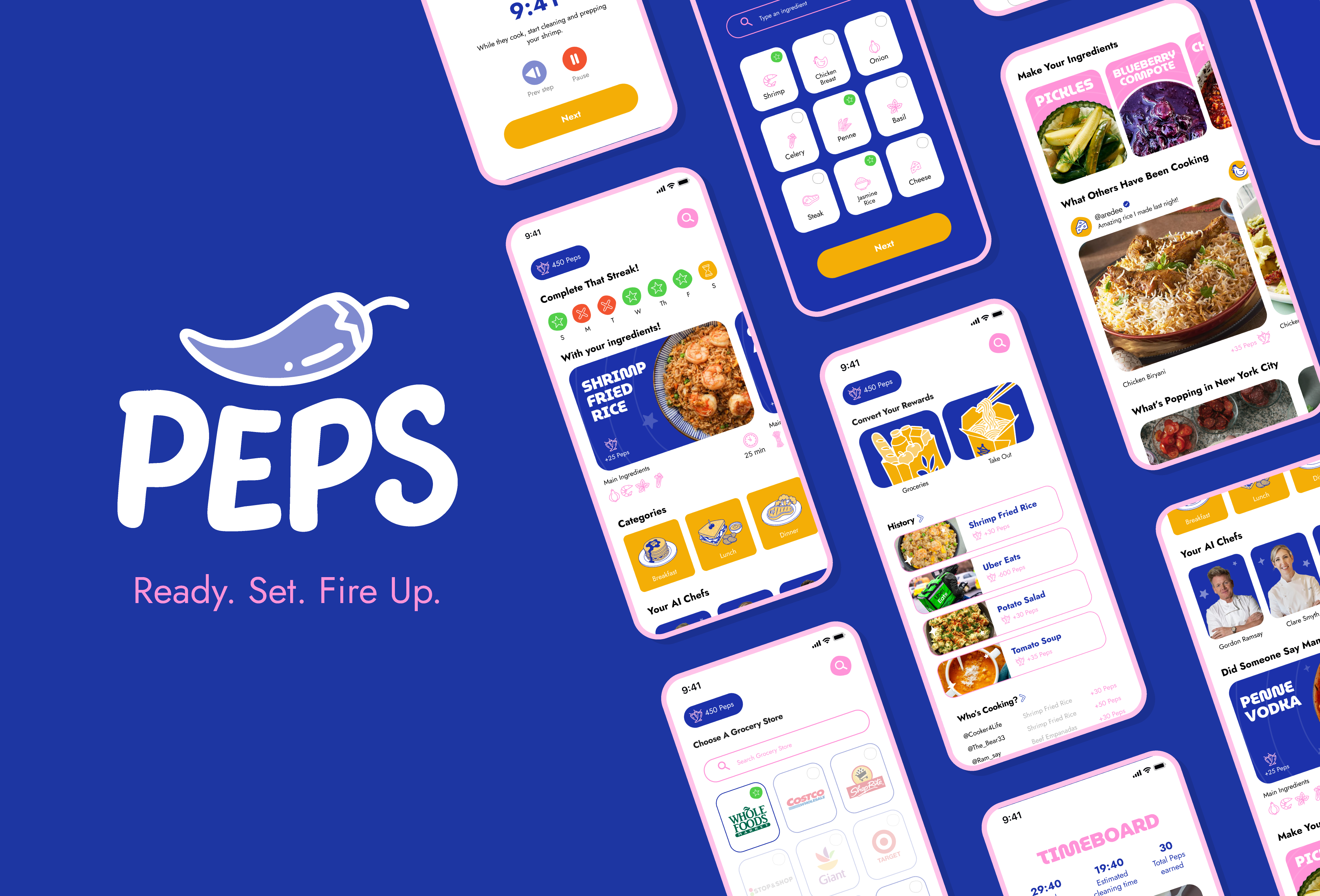
our homescreen shows our users how many peps they have, their progress with streaks, view suggested recipes, available ai chefs, suggested recipes, a sneak peak at social and recipes that’s trending in your area.
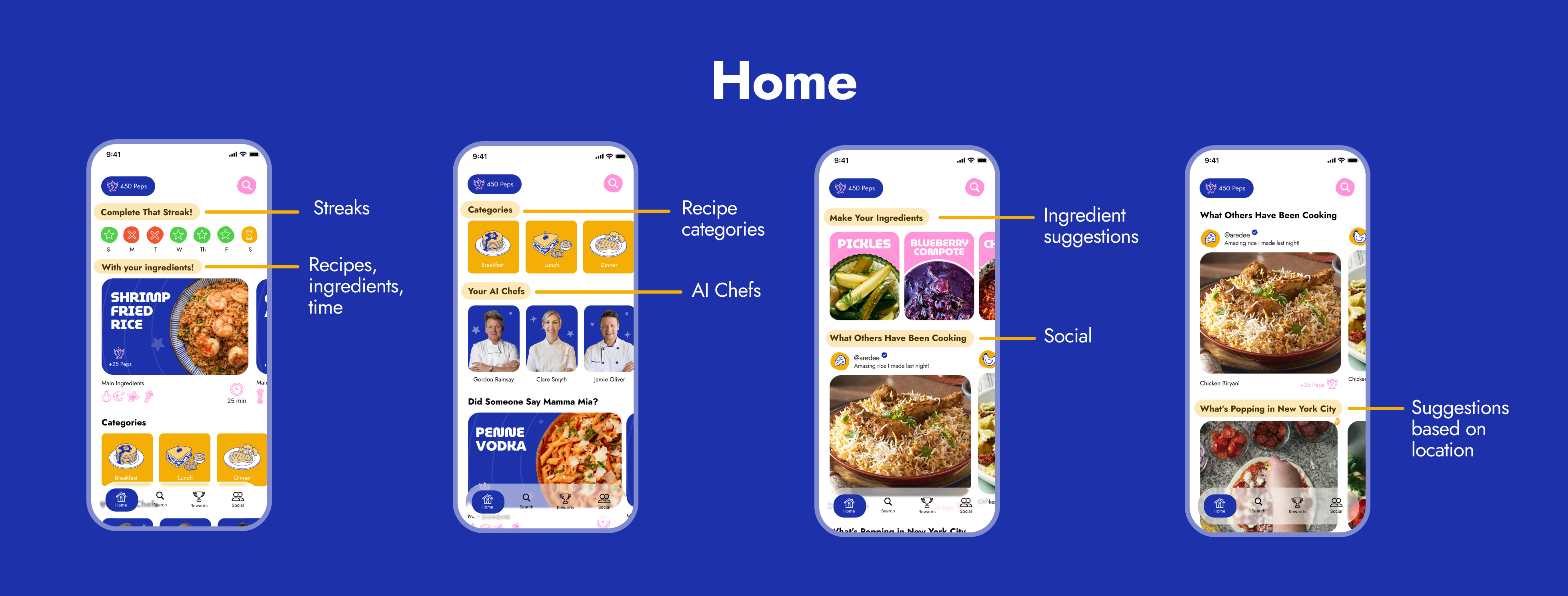
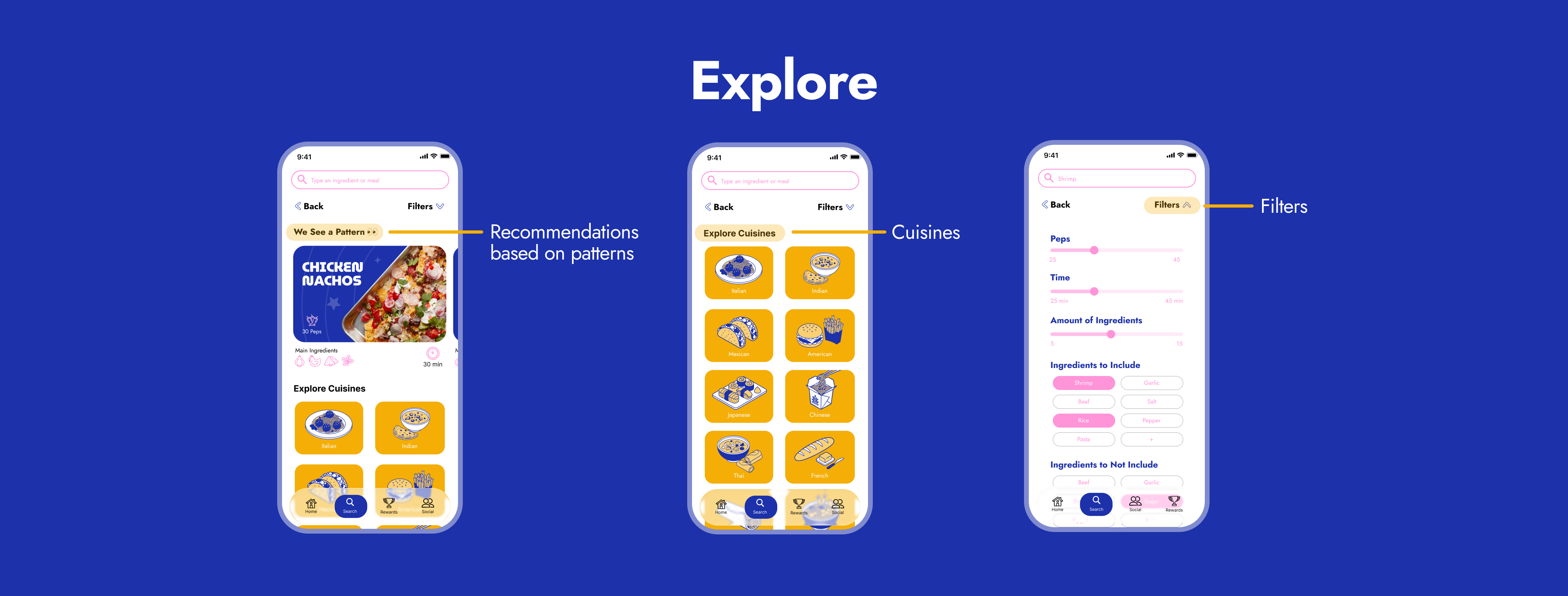
our explore tab gives suggested recipes based on your cooking habits. our explore tab also lets you see recipes by different cuisines, lets you search for recipes and lets you filter your results.
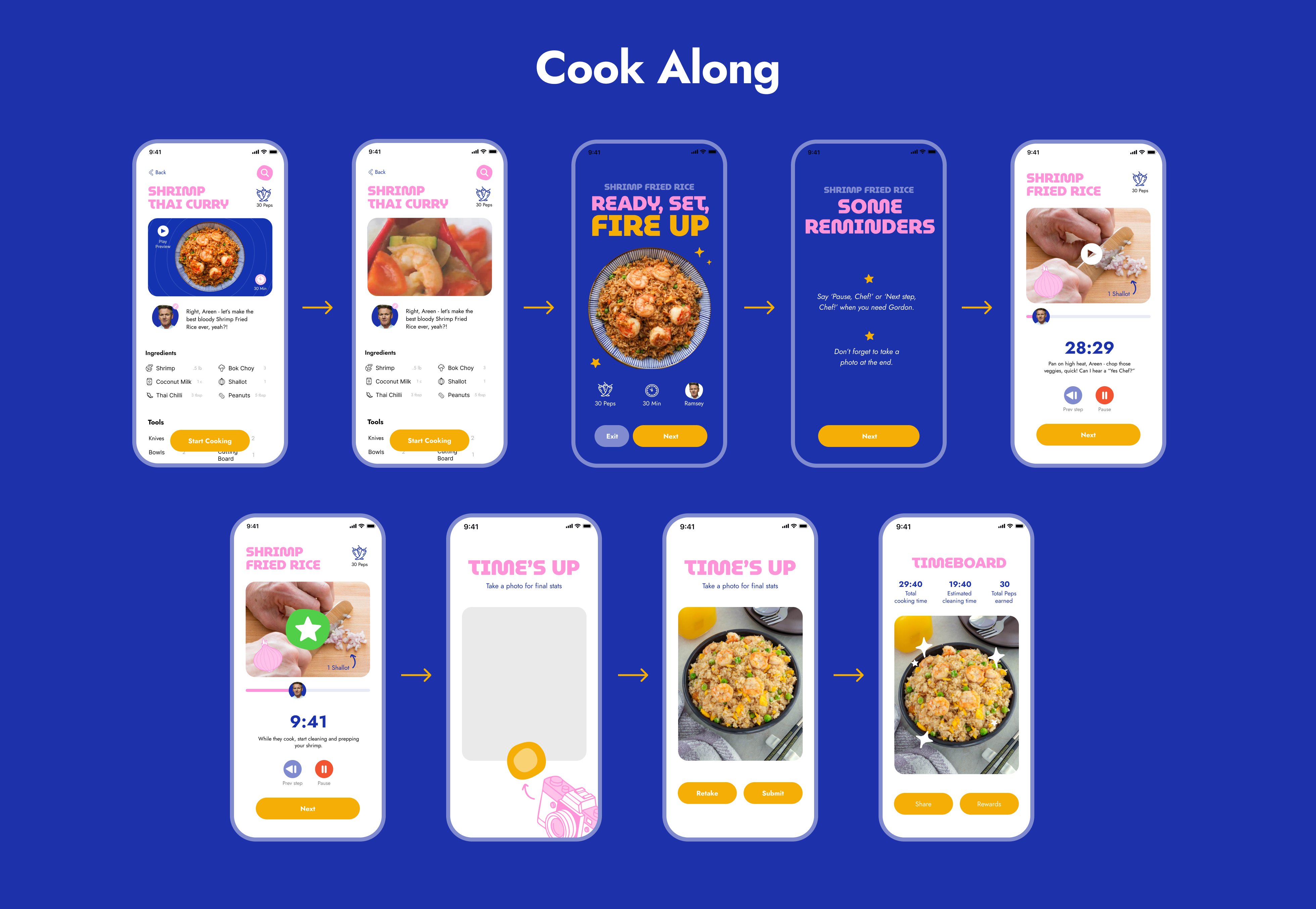
once a recipe is chosen, you’re then sent to a step-by-step experience that guides you through the recipe itself. it gives you a rundown of what ingredients you need, the tools you need and the estimated time it’ll take to finish. in addition, you have access to how many peps you will earn with the recipe and a sneak peak of the video. once you’re ready to “fire up” a timer is and a path is shown to let you know how much of the journey is finished. at the end, you take a photo of your final product and voila!
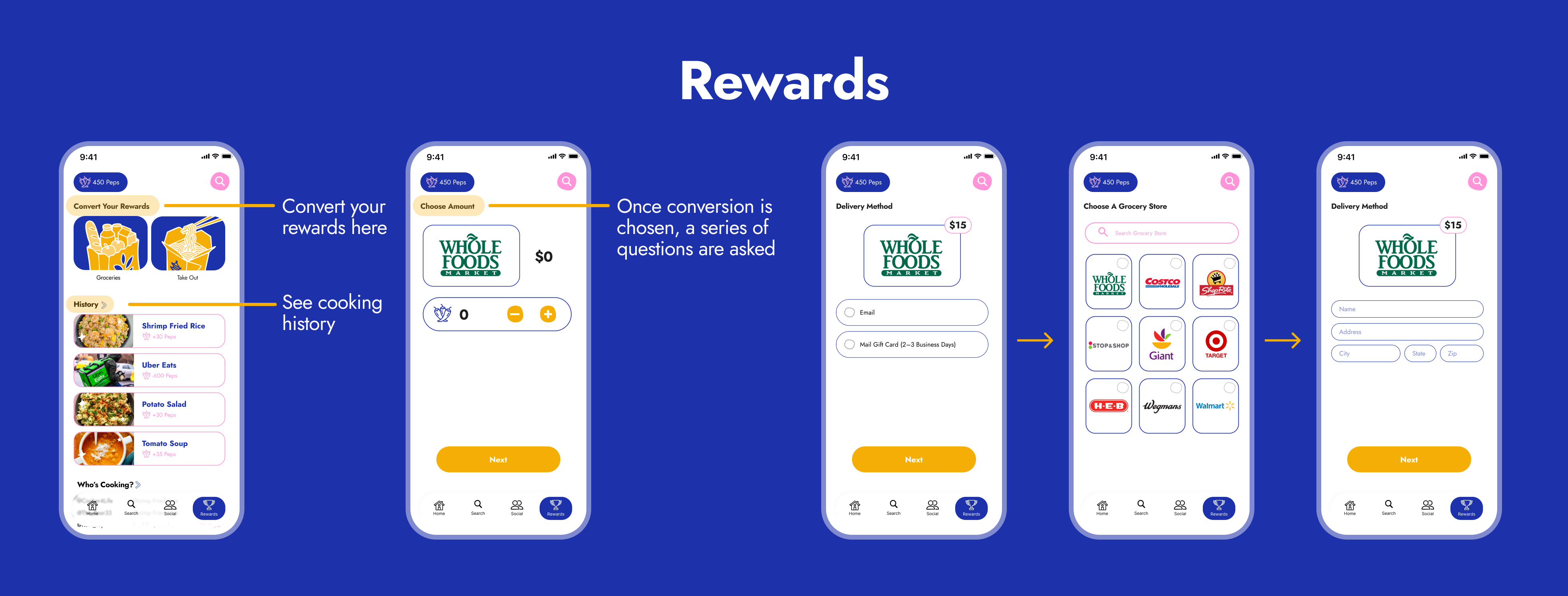
once it’s time to exchange your peps, there’s a rewards page. this dashboard gives you access to rewards history to see and recipes made and any exchanges made. you can also redeem peps for groceries and takeout. because you get $5 for every 100 peps, you can redeem in 100 pep increments. you’re also given the opportunity to get it in a gift card or via email.
the final garnish
let’s go back to this equation—motivation × time × cost × enjoyment and let's go back to our user, laura. how might we make cooking quick, fun, and doable as part of a routine? we believe that by gamifying cooking, this could give laura the ability to have more fun in her already packed schedule. by keeping our recipes to be 45 minutes or less to make, laura is given the opportunity to use her time more efficiently.
on the monetary side of things, laura’s worry for groceries can be mended with this app because the more you cook on peps, the more grocery credit you can earn which you can use to lower your grocery costs. in addition whenever you get too tired to cook, you can also use your peps credit for takeout. and lastly, ai chef brings more enjoyment by giving laura additional guidance and ease throughout the cooking journey.